The Best Smart Sprinkler Controller of 2026
By Ethan Halfhide · Updated
A smart sprinkler controller earns its price the first summer it skips a week of watering you would otherwise have paid for. The best smart sprinkler controller in 2026 is the one that reads local weather accurately, understands your soil and slope, and does not need you to open an app to work. We compared on weather-skip accuracy, zone flexibility, installation difficulty and whether the useful features stay free.
The Best Smart Sprinkler Controller of 2026
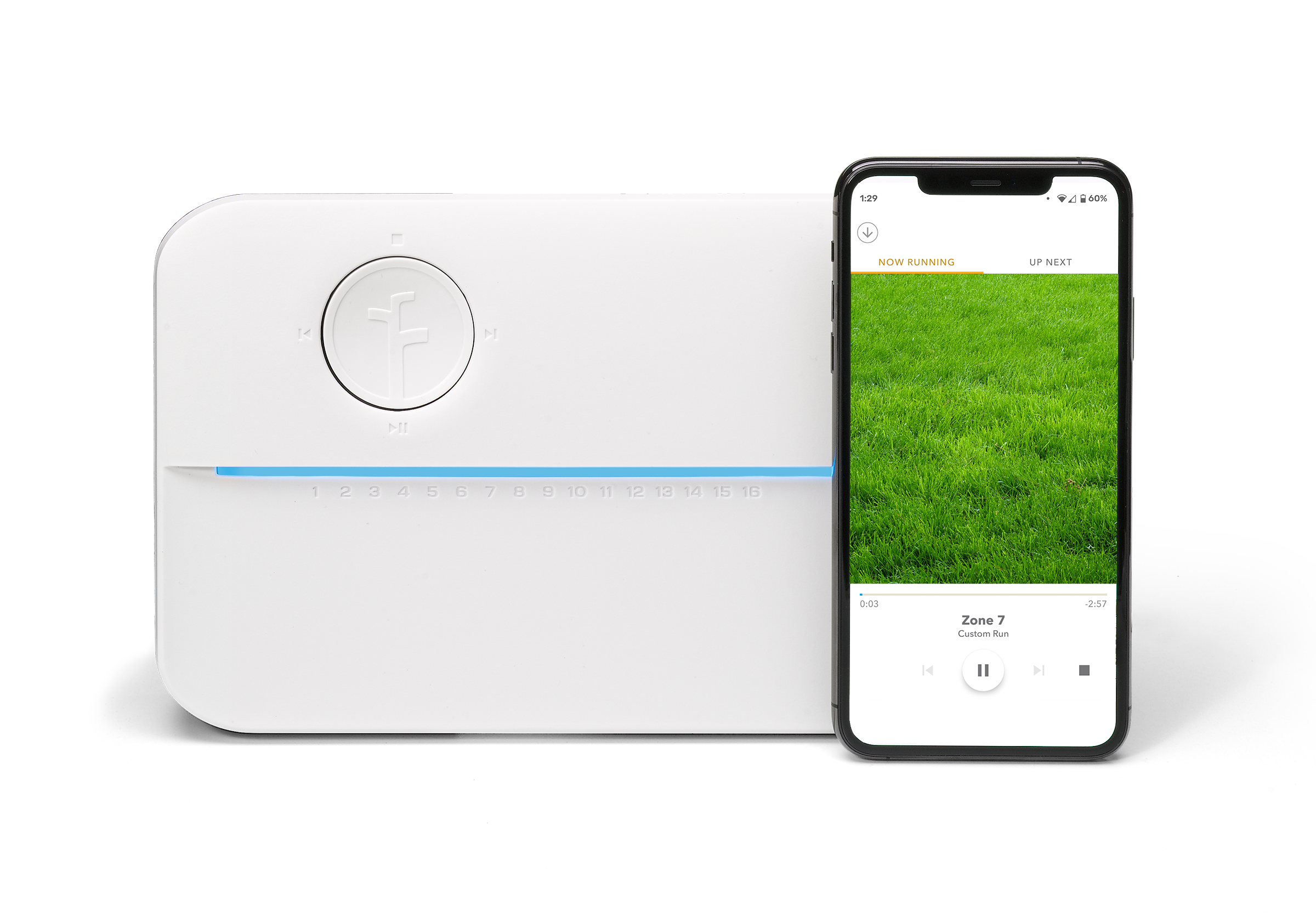 Rachio
 Shelly
How we picked
Four things separate a good smart sprinkler controller from an expensive timer. First, weather intelligence: does it pull hyperlocal forecast and rainfall data and actually skip cycles, or does it just show you the weather. Second, zone configuration — a controller that lets you describe soil type, sun exposure, slope and plant type per zone will water a shaded flowerbed and a south-facing lawn very differently, which is where the water savings come from.
Third, installation: most controllers replace an existing timer on the garage wall and need Wi-Fi that reaches there, which is the most common failure point. Fourth, ongoing cost — we discount any controller that puts weather skip behind a subscription. The Rachio 3 full device page covers how it scores on each.
The verdict
The Rachio 3 remains the smart sprinkler controller to buy in 2026. Its weather-skip logic is the most reliable in the category, its per-zone configuration is detailed enough to matter, and Rachio has not moved core features behind a subscription — which cannot be said of much of the smart home industry. The 8-zone model at around 142 dollars covers most residential yards; step up to the 16-zone version only if you genuinely have that many valves.
If your irrigation is a single drip line or a few beds, skip the category entirely and put a Shelly relay on the solenoid for a tenth of the price — the same logic we apply to smart home automation controllers. Whatever you install, add a leak sensor near the manifold — irrigation leaks are the most common source of quiet water waste in a smart home, and they belong on the same shortlist as your other smart home security devices.
The best smart sprinkler controllers, ranked
Rachio
Rachio 3 Smart Sprinkler Controller (8-Zone)EPA WaterSense certified smart sprinkler that saves up to 32% water
- +EPA WaterSense certified, 32% avg water savings
- +No monthly subscription fee
- −Only works with in-ground sprinkler systems
- −App required for full control
- +Extremely affordable leak detection
- +100dB onboard alarm
- −No Apple HomeKit support
- −No Matter support
- +Full local control
- +No subscription
- −Requires hardwiring
- −Advanced setup
Aqara
Aqara Smart Hub M3Multi-protocol hub with Zigbee 3.0, Thread and Matter support and local automations
- +Supports Zigbee 3.0, Thread and Matter in one hub
- +Zigbee 3.0 bridges legacy Aqara devices to Matter
- −USB power adapter is not included
- −Only one IR air conditioner can be exposed to Matter
- +4K UHD with 180° field of view
- +No subscription required
- −Records on motion (plus time lapse), not 24/7
- −No Matter or HomeKit support listed
Related guides
Frequently asked questions
How much water does a smart sprinkler controller actually save?
The savings come from two mechanisms: skipping cycles when rain has fallen or is forecast, and tailoring run times per zone instead of applying one schedule everywhere. Households replacing a fixed weekly timer typically see the largest reduction, especially in climates with unpredictable summer rain. If your existing schedule was already adjusted seasonally by hand, expect a smaller change.
Does the Rachio 3 need a subscription?
No. Weather intelligence, automatic rain skip and per-zone scheduling all work without a paid plan. Rachio sells optional add-ons, but the features that make the controller worth buying are included with the hardware.
Can I install a smart sprinkler controller myself?
Usually yes. It replaces an existing irrigation timer, and the zone wires transfer over one terminal at a time — labelling them before you disconnect is the whole job. The genuine constraint is Wi-Fi coverage: these controllers usually live in a garage or on an exterior wall, and a weak signal there causes more problems than the wiring ever will.