Honeywell vs Nest Thermostat 2026: Full Comparison and Verdict
By Ethan Halfhide · Updated
For most homes, the Nest Learning Thermostat (4th gen) at $279.99 is the stronger pick: it is Matter-certified, includes a temperature sensor, and Google says it works whether or not you have a C wire. Pick the Honeywell Home X8S ($219.99, or $249.99 with a room sensor) if you already have a C wire and want a 5-inch touchscreen and Ring doorbell video on the wall. On a tight budget, the Matter-certified Honeywell Home X2S costs $79.99. The Honeywell T9 that many comparisons still cite is now discontinued. Prices are from each maker's US store as of October 2026. For more options, see our guide to the best smart thermostats.
Honeywell vs Nest Thermostat 2026: Full Comparison and Verdict
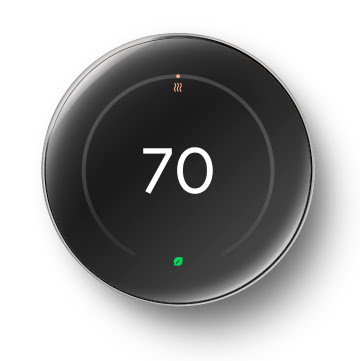 Google Nest
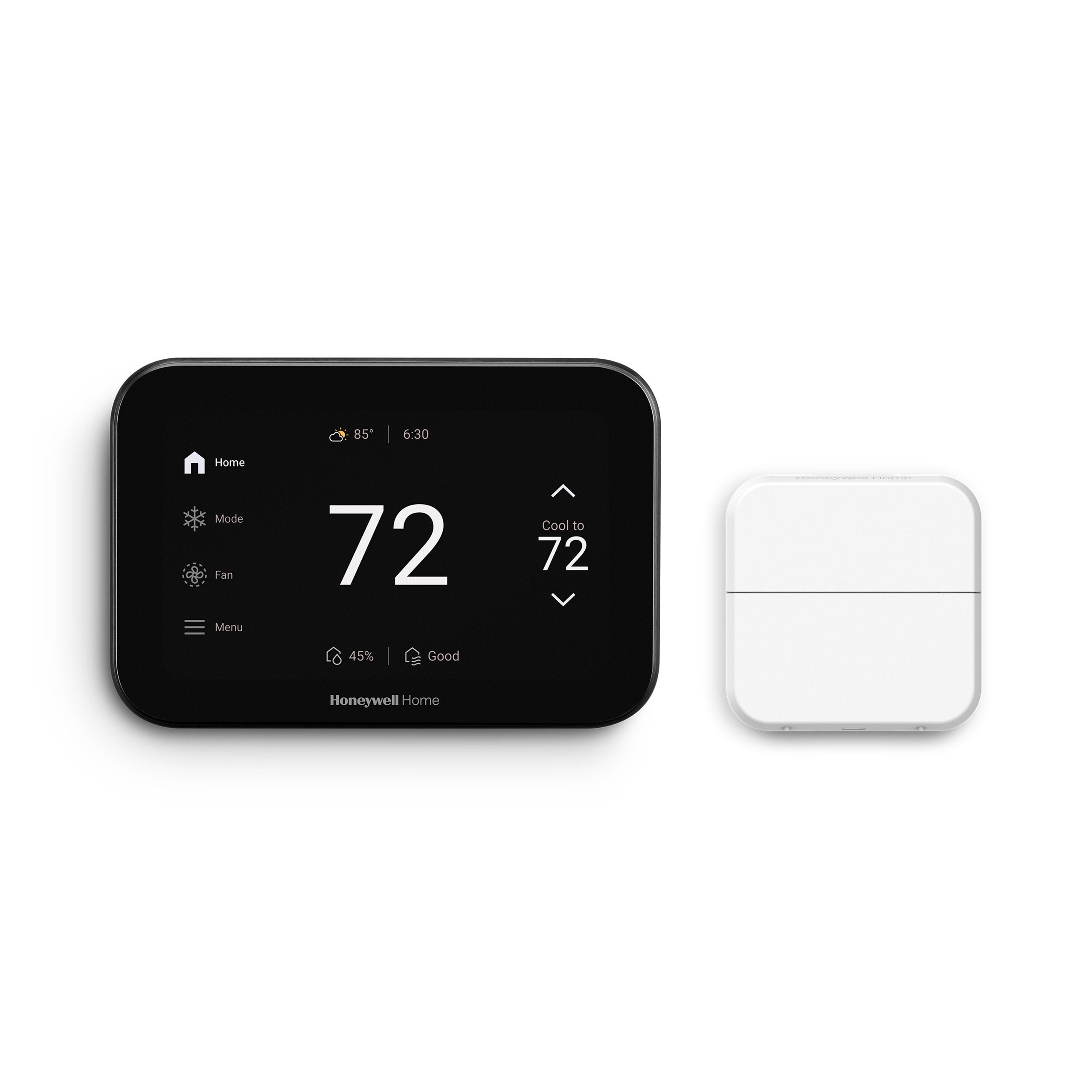 Honeywell Home
Quick picks
| If you want | Pick | Why |
|---|---|---|
| The best all-round thermostat, especially in Google Home | Nest Learning Thermostat (4th gen) | $279.99 as of October 2026, one temperature sensor in the box, Matter-certified, works without a C wire in most homes |
| A touchscreen and Ring doorbell video on the thermostat | Honeywell Home X8S | $219.99, or $249.99 with a room sensor, as of October 2026; Matter-certified; 5-inch touchscreen |
| The cheapest Matter thermostat from either brand | Honeywell Home X2S | $79.99 as of October 2026; works with Apple Home, Alexa and Google Assistant; needs a C wire |
| A low-cost Nest in a simple system | Nest Thermostat | $129.99 as of October 2026; no remote sensor support and its guaranteed security update window has ended |
How we chose
- Current availability. We only recommend thermostats the maker still sells on its own US store today. Several Honeywell models that older comparisons rely on are now marked discontinued.
- Price on the maker's store, including what a remote sensor or C-wire adapter adds.
- Wiring needs, mainly whether a C wire is required.
- Ecosystem support: Google Home, Alexa, Apple Home and Matter.
- Remote sensors and how many each thermostat supports.
- Support life, using Google's published security update dates where they exist.
Our picks come from comparing official specs, prices and support pages from Google and Resideo (which makes Honeywell Home thermostats). HomeGearLab did not test these products.
Comparison table
| Nest Learning Thermostat (4th gen) | Nest Thermostat | Honeywell Home X8S | Honeywell Home X2S | |
|---|---|---|---|---|
| Price (as of October 2026) | $279.99 | $129.99 | $219.99; $249.99 with sensor | $79.99 |
| C wire | Not required in most homes | Some systems need C wire or Power Connector | Required | Required (24 VAC) |
| Controls | Dial, 2.68 in display | Touch bar, 2.4 in display | 5 in touchscreen | Display (size not listed) |
| Remote sensors | 1 included, up to 6 | Not compatible | Optional ($44.99 each) | Not listed |
| Matter | Certified | Added by update in 2023 | Certified | Certified |
| Apple Home | Via Matter | Via Matter | Yes | Yes |
| Alexa / Google | Google Home app; any Matter app | Google Home app | Both | Both |
| App | Google Home | Google Home | Resideo app | Resideo app |
| Retail warranty | 2 years | Not listed | 2 years | 2 years |
The current lineups
Before comparing, it helps to know what each brand actually sells today, because a lot of Honeywell vs Nest content online compares models you can no longer buy new.
Google Nest sells two thermostats on the Google Store: the Nest Learning Thermostat (4th gen) and the Nest Thermostat. The accessories are the Nest Temperature Sensor (2nd gen), from $39.99, the Nest Power Connector at $24.99, and a trim kit for the Nest Thermostat. Google ended support for the 1st and 2nd gen Nest Learning Thermostats on October 25, 2025. Those units were removed from the app, lost remote control, and stopped getting software updates, though they still work as on-device thermostats.
Honeywell Home (made by Resideo) sells the X8S and X2S smart thermostats on honeywellhome.com. The T9 is marked "Discontinued" and "Sold out", and the store says it is "no longer available for sale". The T10+ Pro is also marked discontinued, and both T6 Pro variants show as unavailable. The T5 is labeled discontinued but still shows in stock at $99.99. That means older tables listing a "Honeywell T9 at $129.99" are out of date on both price and availability: the T9's last listed store price was $209.99 with a sensor.
Nest Learning Thermostat (4th gen)
Best for: most homes, and anyone already using Google Home.
The 4th gen Learning Thermostat is $279.99 on the Google Store as of October 2026 (no sale shown), with 12-month financing at $23.33 a month. The box includes one Nest Temperature Sensor (2nd gen) and a trim kit. You can add up to six sensors per thermostat. Google's spec page says it is "designed to work whether or not your home has a common 'C' wire" and that a C wire or Power Connector is needed only in limited cases. The store page names heating-only, cooling-only, zone-controlled and heat pump systems as cases that may need one.
It supports up to 3 heating and 3 cooling stages on conventional systems, and up to 5 heating and 3 cooling stages on heat pumps, plus humidifier, dehumidifier and ventilation wiring. It is Energy Star certified and Matter-certified, and Google says you can control it from "the Matter-compatible smart home app of your choice", which includes Apple Home. Google lists its minimum security update date as August 20, 2029. For a closer look, see our Nest Learning Thermostat 4th Gen page.
Limits: It has no touchscreen; you use the dial and press to navigate. Google's spec page says setup requires the Google Home app, and its setup guide has you sign in with a Google account. Google's update history says an April 2026 update (version 2.4) added on-device setup screens for configuring the thermostat without the app. The sensor measures temperature only, not occupancy.
Honeywell Home X8S
Best for: homes with a C wire that want a big touchscreen, Apple Home or Alexa, or doorbell video on the thermostat.
The X8S costs $219.99 on honeywellhome.com as of October 2026, or $249.99 with one wireless room sensor. Extra sensors are $44.99 each. Resideo launched it on December 3, 2025. It has a 5-inch touchscreen, and it can show live video from First Alert or Ring streaming doorbells and let you talk to visitors (doorbell not included). It is Matter-certified and works with Alexa, Google Assistant and Apple Home. It is Energy Star certified and offers humidity and ventilation control, which may need extra HVAC equipment. Honeywell lists support for up to 4 heat/2 cool heat pump systems and up to 3 heat/4 cool conventional systems.
Limits: It needs a C wire. If you do not have one, Honeywell sells a C-Wire Power Adapter for $24.99. Honeywell does not say how many room sensors it supports. Its warranty is 2 years limited.
Honeywell Home X2S
Best for: the lowest price with Matter, especially for Apple Home users.
The X2S is $79.99 on honeywellhome.com as of October 2026. It is Matter-certified and works with Apple Home, Alexa and Google Assistant, and it supports 2.4 or 5 GHz Wi-Fi. It handles up to 2 heat/2 cool conventional systems and up to 2 heat/1 cool heat pumps with electric backup, and it is not compatible with 120 to 240V electric baseboard heat. It sends heat pump failure and filter change alerts.
Limits: It requires a C wire (24 VAC). Its product page lists no remote sensor support. The warranty is 2 years limited.
Nest Thermostat
Best for: simple one-stage or two-stage systems where you want Nest at the lowest price.
The Nest Thermostat is $129.99 on the Google Store as of October 2026 and comes in Snow. It supports one stage of heating and cooling plus a second stage of either, and heat pumps with auxiliary heat. Google says heating-only, cooling-only, zone-controlled and heat pump systems may need a C wire or the $24.99 Power Connector. Google's software update history lists Matter support in Nest Thermostat version 1.3-10, released June 12, 2023, which lets it be added to Apple Home and other Matter apps.
Limits: It is not compatible with the Nest Temperature Sensor. Google's security update page lists its five-year minimum as October 30, 2025. That date has passed, though the same page still marks it as receiving critical security updates. For a thermostat bought today, the 4th gen Learning model has a much longer guaranteed window.
Costs: what you really pay
The sticker price is only part of it. Add these where they apply:
- Room sensors. The Nest Learning Thermostat includes one. Extra Nest sensors start at $39.99. Honeywell's X8S sensor bundle costs $30 more than the base model, and single sensors are $44.99.
- Power. Both Honeywell picks require a C wire, so budget $24.99 for Honeywell's adapter if you lack one. Nest needs a $24.99 Power Connector only on some systems.
- Subscriptions. None of the official product pages for these four thermostats list a required subscription. Google describes Nest Renew as a free service.
- Rebates. Google and Honeywell both say their thermostats can qualify for energy-provider rebates.
Energy claims are maker estimates: Google says Nest thermostats can save up to 31% on heating and cooling bills, and Resideo says X8S users save an average of $204 a year with recommended scheduling, based on a 2023 user sample.
Installation and the C wire
This is the biggest practical difference between the two brands today. Google says all Nest thermostats use its Power Sharing technology, so a C wire is not required in most homes. The Learning model has a built-in rechargeable battery; the Nest Thermostat uses AAA backup batteries. Both current Honeywell smart models state "C-wire required."
Neither Nest model works with high-voltage (120 or 240V) systems, Honeywell says the X2S does not work with 120 to 240V electric baseboard heat, and the Nest Power Connector works with 24 VAC systems only. If you are replacing a Honeywell with a Nest, Google's wiring checker at g.co/nest/works is the place to start. Google says the Learning Thermostat was designed for you to install yourself and says the Nest Thermostat can be self-installed in under 30 minutes.
Ecosystems and Matter
Both brands now work across platforms. Comparisons that say Nest has no HomeKit support are out of date: the Learning Thermostat (4th gen) is Matter-certified, and Matter devices can be shared with Apple Home. Honeywell's X8S and X2S are Matter-certified and list Apple Home directly.
The difference is the home app. Nest thermostats are set up and managed in the Google Home app, so Google Home is the main experience and Matter is the bridge to everything else. Honeywell runs on its own Resideo app and connects equally to Alexa, Google Assistant and Apple Home. If you use Apple Home or Alexa first, Honeywell is the more neutral choice. Our page on Matter smart home devices explains what Matter adds, and our list of devices that work with Apple Home covers the Apple side. Matter control in a second app needs a Matter hub for that platform.
Sensors
Nest has the clearer sensor story. The 4th gen Learning Thermostat includes a sensor and supports up to six, with up to 18 per home. Google says the Nest Temperature Sensor is designed only to measure temperature, connects over Bluetooth Low Energy, and has up to 3 years of battery life. The cheaper Nest Thermostat cannot use sensors at all.
On the Honeywell side, only the X8S supports room sensors in the current lineup. Honeywell does not publish a maximum sensor count for the X8S, but its room sensor page describes a wireless temperature, humidity and motion sensor with a range of up to 200 feet, and the X8S page lists occupancy and presence detection. If remote sensors matter most, compare our Ecobee vs Nest thermostat comparison.
Privacy and accounts
Nest is built around a Google account: Google's setup guide says to sign in to the Google Home app with an existing Google account or create one. Honeywell's pages say you manage the X8S remotely through its app but do not spell out account terms on the product page. Matter support on both brands lets you add the thermostat to a second platform you already trust.
What we don't know
- How many room sensors the X8S supports.
- The exact name of Honeywell's app: the X8S product page says Resideo Connect, while Resideo's launch release refers to the First Alert app.
- How long Resideo will provide software updates for the X8S and X2S; we found no published date.
- Whether Honeywell's $24.99 C-wire adapter is approved for the X2S; it is listed as an accessory on the X8S page.
Verdict
Buy the Nest Learning Thermostat (4th gen) if you want the most complete package: sensor included, no C wire needed in most homes, Matter for Apple Home, and security updates guaranteed to 2029. Choose the Honeywell Home X8S if you have a C wire and prefer a touchscreen, doorbell video and equal Alexa, Google and Apple support. The X2S is the budget choice. Skip the T9 and T10+: Honeywell lists both as discontinued. For more Honeywell options, see Best Honeywell thermostats 2026, browse the best Nest thermostats, or look at alternatives to Nest.
Featured thermostats
- +Learns your schedule automatically
- +Nest Temperature Sensor (2nd gen) included
- −Google lists Google Home and Matter only, with no native Apple Home or Alexa integration named
- −Some heating-only, cooling-only, zoned and heat pump systems need a Nest Power Connector or C wire
Honeywell Home
Honeywell Home X8S Smart ThermostatMatter certified 5 inch touchscreen thermostat with radar presence sensing and a doorbell viewer
- +Matter certified; works with Alexa, Google Assistant and Apple Home
- +Onboard radar sensor for occupancy and presence detection
- −C-wire required
- −Room sensor costs extra ($44.99) unless you buy the $249.99 bundle
Related guides
Frequently asked questions
Can Nest replace a Honeywell thermostat?
Usually, yes. Google says its Nest thermostats work with 85% of systems, and says the Nest Learning Thermostat (4th gen) works whether or not you have a C wire in most homes. Heating-only, cooling-only, zone-controlled and heat pump systems may need a C wire or the $24.99 Nest Power Connector. Neither Nest model works with 120 or 240V high-voltage systems.
Is Google phasing out Nest?
No. Google still sells the Nest Learning Thermostat (4th gen) and the Nest Thermostat. It did end support for the 1st and 2nd gen Nest Learning Thermostats on October 25, 2025, which removed them from the app and stopped updates. Google lists the 4th gen's minimum security update date as August 20, 2029.
What are the drawbacks of a Nest thermostat?
Nest thermostats have no touchscreen, and Google's setup guide has you add them in the Google Home app while signed in to a Google account. The cheaper Nest Thermostat cannot use remote sensors, and its five-year minimum security update date of October 30, 2025 has passed. Nest sensors measure temperature only.
Does Nest work with Apple HomeKit?
Yes, through Matter. The Nest Learning Thermostat (4th gen) is Matter-certified and Google says it can be controlled from the Matter-compatible app of your choice. Google's update history shows the Nest Thermostat gained Matter support in a June 2023 update. Google says each extra Matter app needs its own Matter hub, so you need an Apple Home hub.
Is the Honeywell T9 still available?
No. Honeywell's own store marks the T9 as discontinued and sold out and says it is no longer available for sale. Its current smart thermostats are the X8S, from $219.99, and the X2S at $79.99, as of October 2026.