Best Carbon Monoxide Detectors in 2026
By Ethan Halfhide · Updated
The best carbon monoxide detector for most smart homes is the First Alert SC5 Smart Smoke & CO Alarm ($129.99 at First Alert as of October 2026): a 2-in-1 alarm with phone alerts, voice warnings and support for the Google Home app, and the alarm Google's help center names as a compatible Nest Protect replacement. Ring households should look at the Kidde Ring Smart Smoke + CO Alarm ($74.97). On a budget, the X-Sense SC07-WX costs $36.54 on sale. If you only need CO protection, the Kidde C3010 has a sealed 10-year battery for $48.29. For everyday air quality readings such as carbon dioxide, fine particles and VOCs, see our smart air quality monitors compared guide.
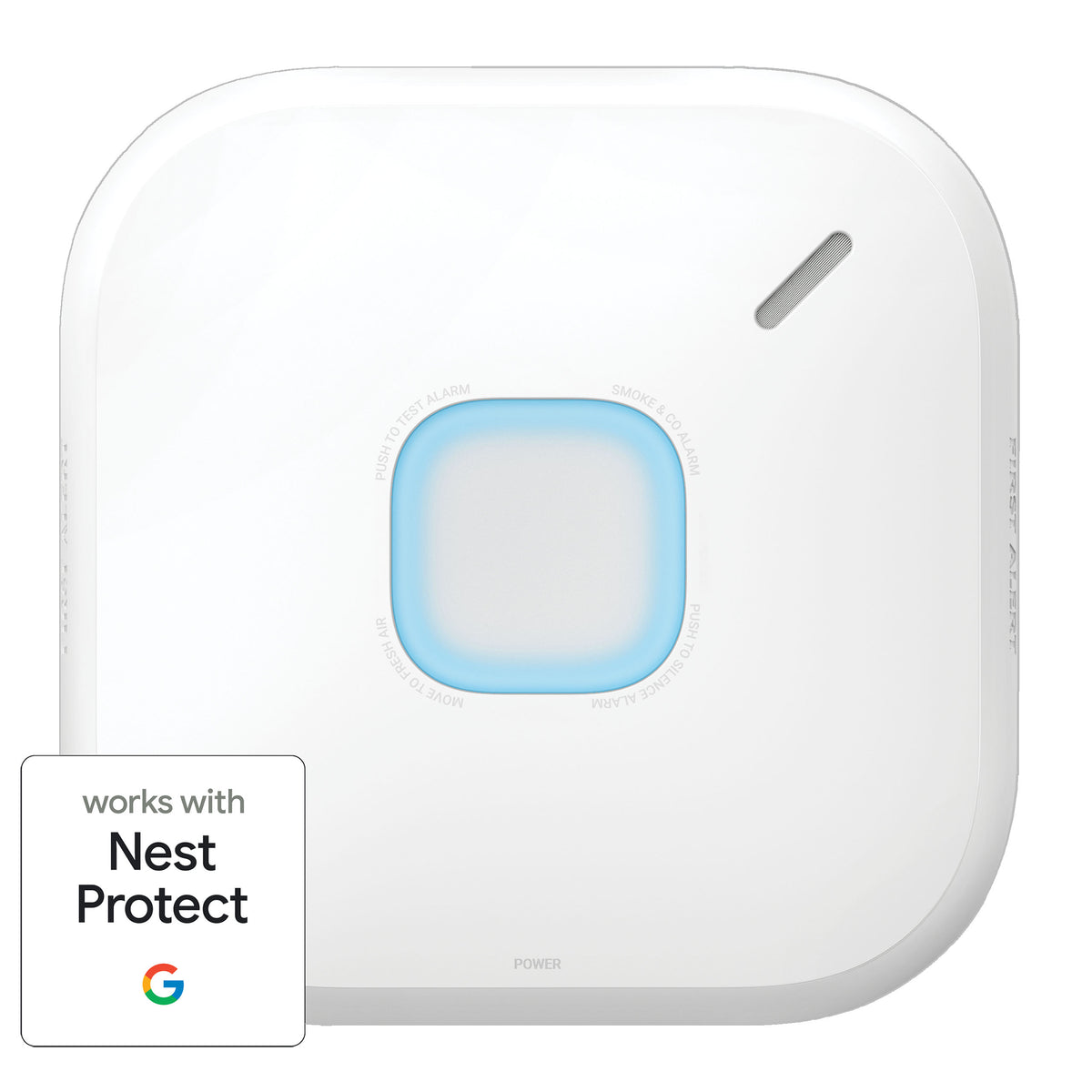 First Alert SC5
Product images: First Alert SC5
Quick picks
| Need | Pick | Why | Price (as of October 2026) |
|---|---|---|---|
| Best smart smoke + CO alarm | First Alert SC5 (hardwire or battery) | Voice alerts with location, works with the Google Home app, fits Nest Protect base plates | $129.99 at First Alert |
| Best for Ring homes | Kidde Ring Smart Smoke + CO Alarm (RGCUAR-RW) | Hardwired, 2.4 GHz Wi-Fi, Ring app alerts, optional 24/7 monitoring | $74.97 at Shop Kidde |
| Best budget smart combo | X-Sense SC07-WX | Direct Wi-Fi, no base station, app alerts and app silencing | $36.54 sale ($42.99 list) at X-Sense |
| Best CO-only alarm | Kidde C3010 | Sealed lithium battery for the 10-year life of the alarm | $48.29 at Shop Kidde |
| Best cheap CO alarm with a ppm readout | X-Sense XC01-R | LCD shows the CO level in ppm, portable or wall-mounted | $17.39 sale ($24.99 list) at X-Sense |
| Make existing alarms smart (Ring Alarm owners) | Ring Alarm Smoke & CO Listener | Sends phone alerts when your current alarms sound | $34.99 at Ring |
How we chose
- Safety basics first. NFPA advises choosing a CO alarm listed by a qualified testing laboratory, so we report what each maker states about listings, and we say where a maker's page does not state one.
- Current availability. Every pick is on the maker's US store today; discontinued models are not recommended.
- Alerts that reach you. Phone notifications, voice alerts and interconnection, where the maker documents them.
- Power and upkeep. Hardwired versus battery, battery type, and the maker's stated service life.
Picks come from comparing official specs, maker store prices, manuals and support pages fetched on October 21, 2026. HomeGearLab did not test these products.
Comparison table
| Model | Detects | Power | Connectivity | Maker's stated life | Price (Oct 2026) |
|---|---|---|---|---|---|
| First Alert SC5 Hardwire | Smoke + CO | 120V hardwired, non-replaceable 3V lithium backup | Wi-Fi (manual: 2.4 and 5 GHz) | End-of-life signal about 10 years after installation | $129.99 |
| First Alert SC5 Battery | Smoke + CO | Six replaceable CR123A lithium batteries | Wi-Fi (manual: 2.4 and 5 GHz) | End-of-life signal about 10 years after installation | $129.99 |
| Kidde Ring Smart Smoke + CO (RGCUAR-RW) | Smoke + CO | 120V hardwired, 2 AA backup | 2.4 GHz Wi-Fi, Ring app | End of Unit Life alert 10 years after installation (user guide) | $74.97 |
| X-Sense SC07-WX | Smoke + CO | Replaceable CR123A, 1-year battery life | 2.4 GHz Wi-Fi only | Up to 10 years from manufacture | $36.54 sale ($42.99 list) |
| Kidde C3010 | CO only | Sealed lithium, 10-year | None | 10 years | $48.29 |
| X-Sense XC01-R | CO only | Replaceable CR123A | None | 10 years | $17.39 sale ($24.99 list) |
| Ring Alarm Smoke & CO Listener | Nothing by itself (listens for alarms) | 3V lithium, up to 3 years | Z-Wave to a Ring Alarm Base Station | Not stated | $34.99 |
First Alert SC5 Smart Smoke & CO Alarm
Best for: anyone replacing a Nest Protect, and Google Home users who want one smart alarm that covers smoke and CO.
Key facts: The SC5 comes in a hardwire version (FSMCO600NVACCL1) and a battery version (FSMCO600NVCL1). First Alert lists both at $129.99 as of October 2026. It pairs a photoelectric smoke sensor with an electrochemical CO sensor and gives voice alerts with a "Heads-Up" warning that names the type and location of the danger. The hardwire model's Quick Connect adapter plug avoids rewiring, and a 3V lithium backup covers outages. First Alert says it is compatible with and replaces Google's Nest Protect. The Google Store says it fits the existing Nest Protect base plate, interconnects with Nest Protect and select First Alert/BRK alarms, and can be checked or silenced in the First Alert or Google Home app. The manuals for both versions say it supports 2.4 GHz and 5 GHz Wi-Fi and gives an end-of-life signal about 10 years after installation. The battery version runs on six replaceable CR123A lithium batteries.
Real limits: First Alert's product pages list only UL 217 10th Edition, the smoke alarm standard; UL 2034, the CO alarm standard, appears in the SC5 quick start guides, which say both versions conform to UL 217 and UL 2034. Nest Protect compatibility needs the Google Home app and a Google Account.
Who should pick it: Nest Protect owners and anyone who wants spoken, location-specific warnings. Older First Alert smart alarms such as the First Alert Onelink Safe & Sound no longer appear on First Alert's site, so the SC5 is the current First Alert smart combo.
Kidde Ring Smart Smoke + CO Alarm (RGCUAR-RW)
Best for: homes that already use Ring, and replacing hardwired alarms.
Key facts: Shop Kidde sells it for $74.97 as of October 2026. Kidde says it connects over 2.4 GHz Wi-Fi using what is in the box, with setup in the Ring app. It needs 120V AC power for full operation and Wi-Fi, and two AA batteries carry it through short outages. Kidde says not to use lithium batteries in it. It gives voice alerts that say why it is sounding. A Ring subscription is needed only for 24/7 smoke and CO monitoring (US homes only). Kidde's non-Ring hardwired smart combo, the 30CUAR-W, is covered on our Kidde Smart Smoke and CO Alarm page.
Real limits: Kidde's product page does not list UL standards or a service life, but its user guide says the combination model conforms to UL 217 and UL 2034 and alerts you to replace it 10 years after it was installed and powered up. Kidde says interconnection options vary by model, so check the user guide.
Who should pick it: Ring users who want hardwired alarms that report to the Ring app.
X-Sense SC07-WX Smart Smoke and CO Alarm
Best for: covering many rooms with smart combo alarms on a tight budget.
Key facts: X-Sense lists one alarm at $36.54 on sale ($42.99 list) and a 3-pack at $95.99 ($119.99 list) as of October 2026. It connects straight to 2.4 GHz Wi-Fi and does not need, or work with, the SBS50 base station. The X-Sense Home Security app sends alerts for alarms, low battery and faults, and lets you silence an alarm from your phone. X-Sense says the CO sensor alarms at 400 ppm within 4 to 15 minutes and 70 ppm within 60 to 240 minutes. Its maximum service life is 10 years from manufacture.
Real limits: It runs on a replaceable CR123A battery that X-Sense rates for one year. It does not work on 5 GHz Wi-Fi. The product page does not list a certification, though X-Sense's manual says its combination alarms conform to UL 217 and UL 2034. The page contradicts itself on interconnection (a feature list mentions it, the site navigation files it under "No Alarm Interconnection"). The optional Protect+ fire dispatch service is a paid subscription, and the page gives no price.
Who should pick it: renters and budget buyers who want phone alerts without wiring.
Kidde C3010 10-Year Sealed Battery CO Alarm
Best for: a simple, low-maintenance CO-only alarm next to existing smoke alarms.
Key facts: Shop Kidde lists it at $48.29 as of October 2026. Kidde says the sealed lithium power supply needs no battery replacement over the 10-year life of the alarm, and the 10-year limited warranty lasts the life of the alarm. LEDs show normal, alarm and error states, and it chirps at end of life.
Real limits: No app, display or interconnection is listed, and the page does not mention UL 2034.
Who should pick it: anyone with working smoke alarms who wants CO coverage without battery changes.
X-Sense XC01-R Standalone CO Alarm
Best for: a cheap second CO alarm with a live ppm reading.
Key facts: X-Sense lists the 1-pack at $17.39 on sale ($24.99 list) as of October 2026. It uses a Figaro electrochemical sensor, shows the CO level in ppm on an LCD, and sounds at 85 dB or more at 10 feet. X-Sense rates the product life at 10 years.
Real limits: The page gives the CR123A battery life as both 5 and 7 years and lists no certification (the XC01 series manual lists UL 2034), and there is no app.
Who should pick it: anyone who wants to see a CO number, not only hear an alarm.
Ring Alarm Smoke & CO Listener
Best for: Ring Alarm owners whose current alarms are still in date.
Key facts: Ring sells it for $34.99 as of October 2026. It listens for the siren of an existing smoke or CO alarm and sends a phone notification. It needs a Ring Alarm or Alarm Pro kit (Z-Wave). Ring says to mount it within 6 inches of the alarm. A 3V lithium battery lasts up to 3 years. Professional monitoring is a $5 per month add-on that first requires a compatible Ring Home subscription. See the Ring Alarm Smoke and CO Listener page for more.
Real limits: Ring states plainly that the device does not detect fire, smoke or carbon monoxide.
What happened to Google Nest Protect
Do not buy a Google Nest Protect as a new alarm. The Google Store no longer lists Nest Protect (its old product URL now opens the store's home page), and the smoke and CO alarm it lists is the First Alert SC5. Google's help center names the First Alert Smart Smoke & Carbon Monoxide Alarm as a compatible replacement for the 2nd gen Nest Protect when used with the Google Home app. 9to5Google reported on March 28, 2025 that Google had announced it was no longer manufacturing Nest Protect and that existing units would keep working through their expiration dates. Google says the 2nd gen Nest Protect must be replaced 10 years after its manufacture date. For other Google hardware swaps, see our Nest alternatives guide.
Placement and installation
What the official sources say:
- NFPA: install CO alarms in a central location outside each sleeping area, on every level of the home, and in other locations required by laws, codes or standards. For the best protection, interconnect all CO alarms throughout the home. Follow the manufacturer's instructions for placement and mounting height.
- CPSC: install battery-operated CO alarms, or alarms with battery backup, on every level of the home and outside sleeping areas. CPSC's CO alarm page says not to install them in attics or basements unless those areas include a sleeping area.
- First Alert SC5 manual: for this combination alarm, First Alert says to install it on every level including finished attics and basements, inside every bedroom, and in the hall near every sleeping area, with a unit at each end of halls longer than 40 feet, and at the top of first-to-second floor stairs and the bottom of basement stairs. For an additional alarm near a furnace or fuel-burning heat source, it says to keep it at least 15 feet away where possible, because closer placement may increase unwanted alarms.
Where these sources differ, NFPA says to follow the manufacturer's instructions for placement and mounting height, and local laws, codes or standards may require more locations.
Hardwired models such as the SC5 Hardwire and the Kidde Ring alarm need 120V AC wiring; battery models do not.
Upkeep, alerts and what CO alarms do not do
NFPA says to test CO alarms at least once a month and replace them according to the manufacturer's instructions. CPSC recommends monthly testing and annual battery replacement; sealed models such as the Kidde C3010 need no battery changes. CO sensors wear out: Google, First Alert, Kidde and X-Sense all give 10-year lives for the models above, while SimpliSafe recommends replacing its CO Detector within 5 years of manufacture.
CPSC states that CO alarms are not intended to protect against low-level CO exposures. Kidde sells separate models it labels with low-level alert detection, such as the COBDL.
If a CO alarm sounds, NFPA says to move immediately to fresh air outdoors or by an open window or door, make sure everyone is accounted for, and call for help from the fresh air location, staying there until emergency personnel arrive.
Ecosystems and subscriptions
Smart alerts run through each maker's app: First Alert or Google Home for the SC5, Ring for the Kidde Ring alarm, and X-Sense Home Security for the SC07-WX. Paid plans add professional monitoring or dispatch: Ring monitoring and X-Sense Protect+. None of the official product pages we used mentions Matter or Apple HomeKit support for these alarms. If you run SimpliSafe, its Smoke & CO Detector works with a Gen 3 Base Station, has a built-in 85 dB siren that also triggers the Base Station siren, and offers dispatch with select monitoring plans; see our SimpliSafe home security hub. For other sensors around the house, browse our smart home sensors category or our pick of the best water leak detector.
For smoke alarms, including combination smoke and CO units, see each smart smoke detector compared in our separate ranking.
What we don't know
- Whether the Kidde C3010 is listed to UL 2034. Neither its Shop Kidde page nor its user guide text states a standard; check the packaging before buying. The other picks state UL 2034 only in their manuals or guides.
- The price of the SimpliSafe Smoke & CO Detector and of X-Sense's Protect+ subscription, which the maker pages did not show clearly.
Verdict
Buy the First Alert SC5 if you want the best-connected smoke and CO alarm, and especially if you are replacing a Nest Protect. Pick the Kidde Ring alarm for Ring homes, the X-Sense SC07-WX on a budget, and the Kidde C3010 for plain sealed-battery CO protection.
Smoke and CO alarms with HomeGearLab pages

First Alert
First Alert SC5 Smart Smoke & CO AlarmWi-Fi smoke and CO alarm that interconnects with and replaces Nest Protect
- +Works with and replaces Google Nest Protect
- +Interconnects so when one alarm sounds, all compatible alarms sound
- −SC5 Battery listed as backordered on firstalert.com on October 21, 2026
- −Nest Protect compatibility needs the Google Home app and a Google Account
Kidde
Kidde Smart Smoke + CO Alarm (30CUAR-W)Hardwired Wi-Fi smoke and CO alarm with app alerts, voice alerts and Alexa and Google Home support
- +Smoke and CO detection with Kidde app notifications
- +One smart alarm adds phone alerts for existing Kidde hardwired alarms
- −Not listed on Kidde's US online store as of October 2026
- −Needs 120V hardwiring; batteries are backup only
- +Cheap retrofit
- +Works with existing alarms
- −Requires a Ring Alarm base station
- −Not a detector itself
Related guides
Frequently asked questions
How many carbon monoxide detectors are recommended for a home?
NFPA says to install CO alarms in a central location outside each sleeping area and on every level of the home, plus anywhere local laws or codes require. CPSC gives similar guidance: every level and outside sleeping areas.
What are some popular brands of carbon monoxide detectors?
First Alert, Kidde and X-Sense all list CO-only and combination smoke and CO alarms on their own US sites. The Google Store no longer lists the Nest Protect, and Google's help center names First Alert's smart smoke and CO alarm as its compatible replacement.
Which carbon monoxide alarm is the most effective?
No official body ranks brands. NFPA advises choosing a CO alarm listed by a qualified testing laboratory, installing it where the manufacturer and local code say, interconnecting all CO alarms for the best protection, testing monthly and replacing it on the maker's schedule.
What carbon monoxide detector do firemen recommend?
NFPA, the fire safety standards group, does not name a brand. Its advice is to pick an alarm with the label of a recognized testing laboratory and to call your local fire department's non-emergency number to find out what number to call if the CO alarm sounds.
Do smart carbon monoxide detectors need a subscription?
Not for alerts on the picks here. The First Alert SC5, Kidde Ring alarm and X-Sense SC07-WX send app alerts without a plan. Subscriptions add professional monitoring or dispatch: Ring lists Smoke & CO monitoring at $5 a month as an add-on that requires a compatible Ring Home subscription, and X-Sense sells an optional Protect+ dispatch service.
How long do carbon monoxide detectors last?
It depends on the model. Google says the 2nd gen Nest Protect must be replaced 10 years after manufacture, First Alert's SC5 and the Kidde Ring alarm signal end of life about 10 years after installation, X-Sense rates its alarms at up to 10 years, and SimpliSafe recommends replacing its CO Detector within 5 years of manufacture.