The Best Smart Plugs of 2026
By Ethan Halfhide · Updated
The best smart plugs in 2026 cost less than a takeaway and are the cheapest way to make a dumb appliance schedulable. Matter certification is now standard at every price point, which means one plug pairs with Alexa, Google Home and Apple Home at once. The real differences are energy monitoring accuracy, whether control survives an internet outage, and physical size, because a fat plug blocks the socket next to it.
The Best Smart Plugs of 2026
 TP-Link Kasa
 Eve
 TP-Link Tapo
 Shelly
How we compared
Four things decided the ranking. Matter certification, so the plug is not locked to one assistant. Energy monitoring resolution, since a plug that reports to 0.001 kWh tells you something a plug that reports to 1 kWh does not. Local control, which determines whether schedules keep running when your broadband drops. And footprint, because a plug that blocks the second socket in a duplex outlet halves its own usefulness.
The picks, compared
#1 TP-Link Kasa Smart Plug Mini KP125M: The best all-rounder at 14.99 dollars. Matter certified, energy monitoring included, local control, and small enough to stack two per outlet. The Kasa app is unfussy and the plug has been reliable across firmware generations.
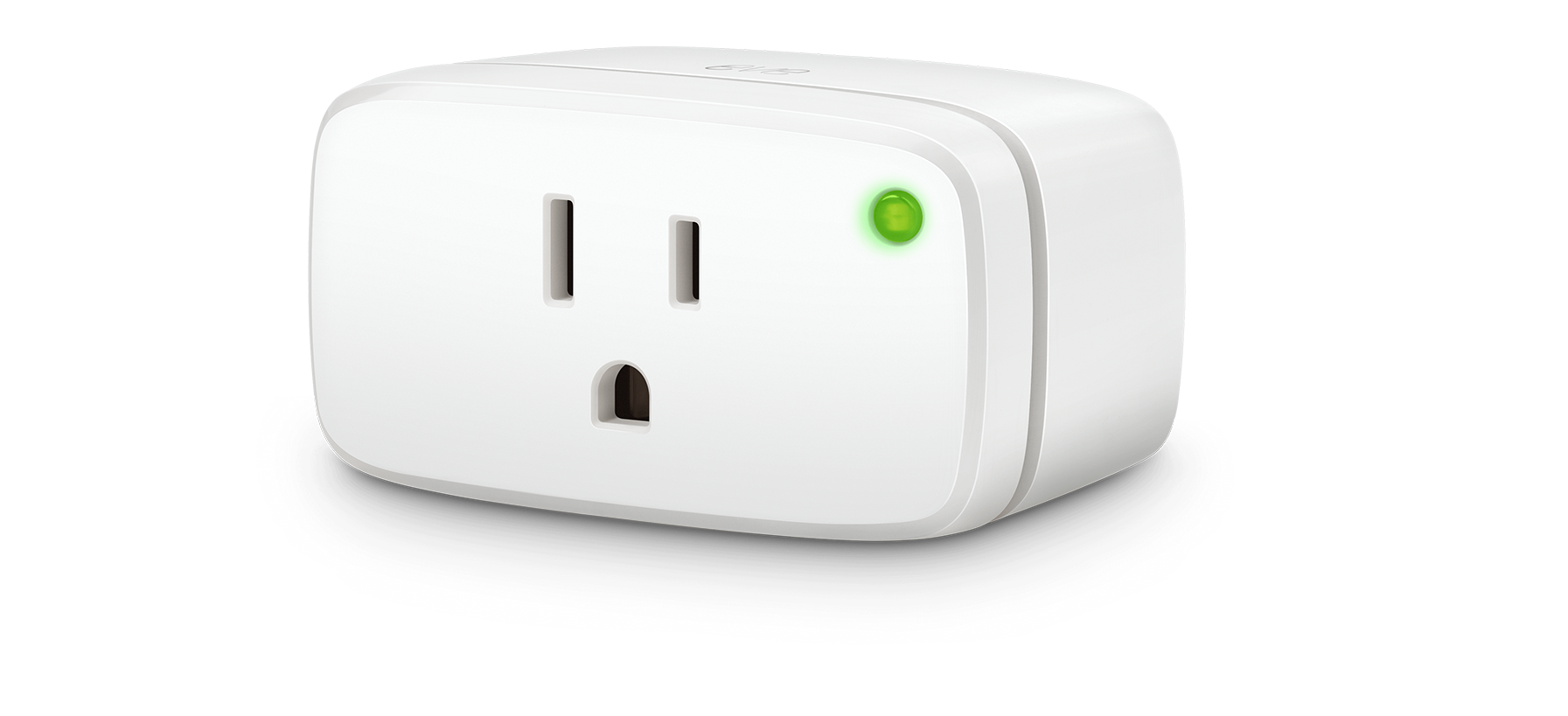
#2 Eve Energy Smart Plug: The pick for people who want real energy data. It reports wattage, amperage, voltage and cumulative kWh in real time, and Thread plus Matter gives it instant response with local control. At 39.95 dollars it is the expensive option, and it earns that in an Apple Home setup.
#3 TP-Link Tapo P110M Smart Plug Mini: The cheapest credible Matter plug at 12.99 dollars, tracking consumption to 0.001 kWh and letting you enter your electricity rate for live bill estimates. It leans on the cloud rather than local control, which is the compromise at this price.
#4 Shelly Plus 1 Mini: Not a plug at all, but the better answer if you are willing to wire. It fits behind an existing switch or inside a junction box and makes the whole circuit smart, runs entirely locally, and works with Home Assistant. 15.99 dollars and a screwdriver.
Verdict
Buy the TP-Link Kasa Smart Plug Mini for most jobs. It is cheap enough to buy several, Matter certified, and keeps local control. Spend up to the Eve Energy only if you want serious energy tracking or live in Apple Home, and go with the Shelly Plus 1 Mini if you would rather make the fixture smart than the plug. Next, see the best smart lights of 2026 and the best HomeKit devices.
A plug only controls what is plugged into it, so for ceiling lights on a wall switch, see our pick for the best smart switch. If you are equipping a whole home on a tight budget, our budget smart home devices buying guide pairs plugs like these with other low-cost picks. For holiday lights, fountains or a patio, the plugs above are not weather rated, so see outdoor smart plugs compared for models built to sit outside.
The best smart plugs, ranked
TP-Link Kasa
TP-Link Kasa Smart Wi-Fi Plug Slim (KP125M)Compact Matter certified Wi-Fi smart plug with energy monitoring
- +Matter certified: set up with the Alexa, Google Home or Apple Home app
- +Real-time and historical energy monitoring in the Kasa app
- −No direct price on TP-Link's US product pages
- −Wi-Fi band not published on the product pages
Eve
Eve Energy Smart PlugMatter over Thread smart plug and power meter with no Eve cloud or subscription
- +Works with Apple Home, SmartThings, Alexa, Google Home and Home Assistant over Matter
- +Power metering, plus cost estimates from your electricity rate in the Eve app
- −Requires a hub with Matter controller and Thread border router functions
- −Eve app on Android only for devices added through Google Home
TP-Link Tapo
TP-Link Tapo P110M Smart Plug MiniMatter-certified mini smart plug with precise energy monitoring
- +Matter certified, with Apple Home, Alexa, Google Assistant and SmartThings listed
- +Energy monitoring with electricity rate input for bill estimates
- −2.4 GHz Wi-Fi only (802.11b/g/n); no 5 GHz
- −TP-Link does not state the energy monitoring resolution or accuracy
- +Fully local control with a built-in web interface
- +Dry contact relay for garage doors, gates and HVAC inputs
- −Discontinued; Shelly names the 1 Mini Gen3 as successor
- −No Matter support on this model
Get the free 2026 Smart Home Starter Guide
Pick an ecosystem, choose your first three devices, and follow a 30-day roadmap.
Related guides
Frequently asked questions
Do smart plugs work without Wi-Fi?
Partly. Plugs with local control such as the Kasa KP125M and the Shelly Plus 1 Mini keep running their schedules and respond to the physical button when the internet drops, because the logic lives on the device or on a local hub. Cloud-dependent plugs like the Tapo P110M lose app and voice control until the connection comes back, though whatever was switched on stays on.
Are smart plugs with energy monitoring accurate?
Accurate enough to make decisions with, not accurate enough to bill from. The Eve Energy and Tapo P110M both report to a fraction of a kilowatt hour and track within a few percent of a dedicated meter. That is fine for finding out that an old chest freezer is costing you 90 dollars a year, which is usually the whole point.
Can one smart plug work with Alexa and Apple Home at the same time?
Yes, if it is Matter certified. All four picks here support Matter, which lets a single device pair with multiple ecosystems simultaneously rather than committing to one app. Before Matter this required duplicate hardware or bridges, and it is the main reason to avoid older non-certified plugs even when they are on sale.