Best Solar Security Camera (2026): 8 Picks Compared
By Ethan Halfhide · Updated
The best solar security camera for most homes is the Reolink Argus 4 Pro with Solar Panel 2 ($179.99 as of October 2026): 4K across a 180° view, free person and vehicle detection and microSD storage with no monthly fee. The eufy SoloCam S340 is the pan and tilt pick, and the Tapo C425 Kit ($99.99) is the budget pick. Below, eight solar cameras compared on whether the panel is built in or separate, how much sun each maker says it needs, and what you can save without a plan. Several of them also appear in our guide to no-subscription security cameras.
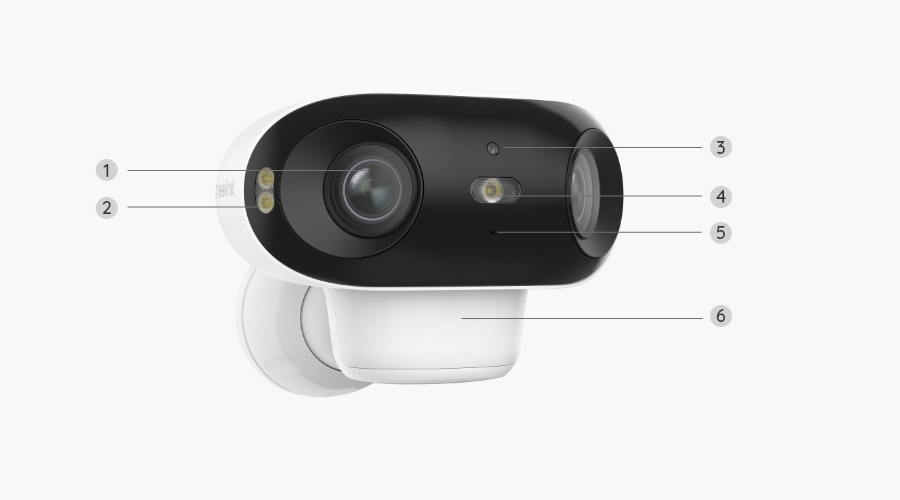 Reolink Argus 4 Pro
 eufy SoloCam S340
 Tapo C465
Product images: Reolink Argus 4 Pro, eufy SoloCam S340, Tapo C465
The short answer
A solar security camera is a battery camera with a small solar panel that tops up the battery during the day, so you rarely or never take it down to charge. The panel is either built into the camera body, clipped onto it, or a separate panel on a cable. What separates the good ones is how much sun they need and whether you must pay a monthly fee to save video.
- Best overall: Reolink Argus 4 Pro with Solar Panel 2. 4K across a 180° view, free person, vehicle and animal detection, microSD up to 512 GB and no monthly fee for local storage. The panel is a separate accessory, sold as a bundle.
- Best pan and tilt: eufy SoloCam S340. Two lenses (3K wide plus 2K telephoto), 355° pan, a removable 2.2 W panel in the box, 8 GB of built-in storage and no monthly fee.
- Best built-in panel: TP-Link Tapo C465. 4K with the solar panel built into the camera, about 50 minutes of direct sun a day by Tapo's figures, and microSD up to 512 GB.
- Best budget: TP-Link Tapo C425 Kit. 2K camera plus solar panel for $99.99, free person, pet and vehicle detection.
- Cheapest pan and tilt: eufy SoloCam E30. 2K, 360° pan, removable panel included, microSD storage with no subscription.
- Cheapest with a catch: Wyze Battery Cam Pro with Solar Panel. 2.5K and microSD recording for $99.98, but person and vehicle alerts need Cam Plus.
- For Ring homes: Ring Outdoor Cam Plus Solar. 2K and dual-band Wi-Fi 6, panel included, but saving any video needs a Ring plan.
- For Blink homes: Blink Outdoor 4 with the Blink Solaris Battery Pack, which needs only 45 minutes of direct sun a day by Blink's figures.
All prices are from each maker's own US store as of October 2026. Blink's products page lists no price for the Outdoor 4 or the Solaris Battery Pack, so we give none for that pair.
Solar security camera comparison table
| Camera | Price (maker's US store, Oct 2026) | Solar panel | Daily sun the maker cites | Save video with no plan | Resolution |
|---|---|---|---|---|---|
| Reolink Argus 4 Pro + Solar Panel 2 | $179.99 (1 camera + 1 Solar Panel 2 bundle) | Separate 6 W panel, sold as a bundle option | Not stated | Yes: microSD up to 512 GB, Reolink Home Hub | 4K, 180° (5120 x 1440) |
| eufy SoloCam S340 | $199.99 | Included, removable 2.2 W panel | 2 hours | Yes: 8 GB built-in, HomeBase S380 | 3K wide + 2K telephoto |
| TP-Link Tapo C465 | $139.99 | Built into the camera | 50 minutes | Yes: microSD up to 512 GB | 4K (3840 x 2160) |
| TP-Link Tapo C425 Kit | $99.99 (list $129.99) | Included in the kit | 45 minutes (Tapo test conditions) | Yes: microSD up to 512 GB | 2K (2560 x 1440) |
| eufy SoloCam E30 | $149.99 on the product page, $99.99 on eufy's solar collection page | Included, removable | 2 hours | Yes: microSD up to 128 GB | 2K |
| Wyze Battery Cam Pro + Solar Panel | $99.98 (panel alone $28.98) | Separate panel, sold as a bundle option | Not stated | Yes: microSD up to 256 GB | 2.5K (2560 x 1440) |
| Ring Outdoor Cam Plus Solar | $139.99 (was $159.98) | Included, packaged separately | 2 to 3 hours | No: Ring says videos are not saved without a plan | 2K |
| Blink Outdoor 4 + Solaris | No price listed on blinkforhome.com | Solaris battery pack with built-in panel, attaches to the camera | 45 minutes | Yes, with a Sync Module 2 (USB drive) or Sync Module XR (microSD) | 1080p |
"Daily sun" is each maker's own figure for keeping the battery topped up, usually measured in direct sunlight under test conditions. Real needs depend on how often the camera records.
Reolink Argus 4 Pro with Solar Panel 2: best overall
Who it's for: Anyone covering a wide yard, driveway or the front of a house who wants one wire-free camera and no monthly bill.
Key facts
- Reolink's US store shows $179.99 for the "1 Camera + 1 Solar Panel 2" bundle as of October 2026, marked $35 off $214.99. The camera's own box contents list the camera, bracket, strap, mounting plate and USB-C cable, so the panel is a separate accessory that Reolink sells as a bundle option.
- Two lenses stitched into one 180° image at 5120 x 1440 (Reolink calls it 4K) at up to 15 fps, with color night vision that Reolink calls ColorX.
- Person, vehicle and animal detection plus PIR motion sensing.
- 5,000 mAh rechargeable battery. Reolink lists Solar Panel 2 (6 W) as its solar option.
- Reolink's own words: "No Monthly Fees For Local Storage." It records to a microSD card up to 512 GB, or to a Reolink Home Hub if you run several cameras.
- Dual-band Wi-Fi 6 (2.4 GHz and 5 GHz), IP66, and works with Google Assistant and Alexa.
Trade-offs: Reolink's page does not say how many hours of sun the panel needs, so plan on a spot with clear sky. The frame rate tops out at 15 fps. For how the brand compares with its closest rival, see eufy vs Reolink.
eufy SoloCam S340: best pan and tilt
Who it's for: Yards and driveways where a fixed camera leaves blind spots and there is no outlet nearby.
Key facts
- $199.99 on eufy.com as of October 2026.
- A 3K wide-angle lens (2880 x 1620) and a 2K telephoto lens (2304 x 1296), hybrid 8x zoom, and 355° horizontal and 60° vertical pan and tilt.
- Solar panel included: an adjustable, removable 2.2 W panel that mounts on the camera or connects by cable. eufy says 2 hours of direct sunlight a day keeps it continuously powered.
- On battery alone eufy claims about 3 months, based on 300 seconds of recording a day.
- 8 GB of built-in storage. eufy's spec table lists the monthly fee as "No" and says "One-time purchase. No monthly fee or hidden costs." Pairing a HomeBase S380 adds storage and familiar face recognition.
- On-device human and vehicle detection. Works with Alexa and Google Assistant. 2.4 GHz Wi-Fi only.
Trade-offs: 8 GB fills quickly without a HomeBase. eufy lists weather protection and a -4°F to 122°F operating range but no IP rating. Optional cloud backup comes with eufy's Plus Membership at $15 a month or $135 a year.
TP-Link Tapo C465: best built-in panel
Who it's for: People who want the neatest install, with no panel to aim on a separate bracket and no cable to run.
Key facts
- $139.99 on Tapo's US store as of October 2026.
- Tapo calls it a "Battery-Powered Security Camera with Built-In Solar Panel" and lists an integrated solar panel as the power source.
- Tapo says 50 minutes of direct sunlight powers the camera for a full day, assuming up to 100 events a day, and that it lasts up to 180 days without sun at 300 seconds of use a day. The store listing gives a 7,800 mAh battery.
- 4K UHD (3840 x 2160), starlight color night vision and two built-in spotlights.
- On-device person, pet and vehicle detection with "No Monthly Fees" in Tapo's words. microSD up to 512 GB (card sold separately), and it works with the Tapo H500 hub.
- Dual-band Wi-Fi (2.4 GHz and 5 GHz), IP65, Alexa and Google Assistant.
Trade-offs: Because the panel is part of the camera, the camera has to face where the sun is. A separate panel on a cable lets you aim the camera into shade and the panel at the sky. Notifications with a snapshot are a Tapo Care feature.
TP-Link Tapo C425 Kit: best budget
Who it's for: Renters and first-time buyers who want a solar camera up in minutes for about $100.
Key facts
- $99.99 on Tapo's US store as of October 2026 (list $129.99). That price is for the kit: the camera plus its solar panel.
- 2K QHD (2560 x 1440), color night vision, IP66 (Tapo notes the rating applies to the camera).
- Free person, pet and vehicle detection ("Free Smart AI Detection" in Tapo's words). microSD up to 512 GB.
- Tapo's kit page cites 45 minutes of sunlight under its test conditions with up to 100 events a day. Without sun, Tapo claims up to 300 days at 230 seconds of use a day, or about 180 days at 360 seconds.
- Works with Amazon Alexa and Google Assistant.
Trade-offs: 2.4 GHz Wi-Fi only. Tapo lists notifications with a snapshot under Tapo Care, so free alerts come without a picture. The Tapo C425 device card further down shows a lower figure: that is the camera-only price recorded on our Tapo C425 page in September 2026, without the solar panel. The kit with the panel is the $99.99 quoted here.
eufy SoloCam E30: cheapest pan and tilt
Who it's for: Anyone who wants a camera that turns to follow people across a yard, at the lowest price.
Key facts
- Two prices on eufy's own site on October 12, 2026: $149.99 on the E30 product page (which also offered $50 off with a coupon code), and $99.99 ("Saved $50.00") on eufy's solar camera collection page. Check the price at checkout.
- 2K video with an f/1.6 lens and 360° pan, with AI tracking of people and vehicles.
- A removable solar panel is included. eufy says 2 hours of daily sun keeps it charged, and claims about 3 months on battery alone at 300 seconds of recording a day.
- "No Monthly Fee": records to a microSD card up to 128 GB (not included). eufy says it has no built-in storage.
- IP65.
Trade-offs: The 128 GB microSD limit is a quarter of the Tapo and Reolink limits, and there is no built-in memory if the card is missing.
Wyze Battery Cam Pro with Solar Panel: cheapest, with a catch
Who it's for: Wyze households, or anyone who mostly wants motion clips on a card and does not mind basic alerts.
Key facts
- $89.98 for the camera, or $99.98 with the Wyze Solar Panel, on wyze.com as of October 2026 (the white bundle was sold out on October 12, black was in stock). The panel alone is $28.98.
- 2.5K HDR (2560 x 1440), 108° horizontal field of view, IP65.
- Removable 6,200 mAh battery that Wyze rates at up to 6 months with normal use.
- Records to a microSD card up to 256 GB with no subscription. Dual-band Wi-Fi (2.4 GHz and 5 GHz).
- Wyze ties person, package and vehicle notifications and cloud recording to Cam Plus, which costs $2.99 a month per camera after a 30-day trial.
Trade-offs: Without Cam Plus you get motion alerts, not "a person is at the gate" alerts. Wyze's page does not give a sunlight figure for its panel.
Ring Outdoor Cam Plus Solar: for Ring homes
Who it's for: Households with Ring doorbells or Ring Alarm that already pay for a Ring plan.
Key facts
- $139.99 on ring.com as of October 2026 (was $159.98).
- The solar version ships with a Solar Panel (USB-C), packaged separately, and a Quick Release Battery Pack. Ring recommends a spot with at least 2 to 3 hours of direct sunlight a day.
- 2K video, 140° horizontal and 160° diagonal field of view, color low-light video Ring calls Low-Light Sight.
- Dual-band Wi-Fi 6 (2.4 GHz and 5 GHz). Rated -4°F to 122°F.
- Without a plan, live view and real-time notifications still work, but Ring says videos and photos are not saved. Ring Solo costs $4.99 a month or $49.99 a year for one camera.
Trade-offs: Ring lists no local storage, so the plan is a running cost for as long as you own it. Smart Alerts and video history are plan features. For Ring against its rivals, see Blink vs Ring and our Arlo vs Ring comparison.
Blink Outdoor 4 with Blink Solaris: for Blink homes
Who it's for: Blink and Alexa households that want to stop replacing AA batteries.
Key facts
- Blink Solaris "combines a solar panel and rechargeable battery pack into one unit." It attaches directly to an Outdoor 4 or Outdoor 2K+ camera and replaces the AA batteries.
- Blink recommends at least 45 minutes of direct sunlight a day and says the battery gives up to one month of power with no charging. Solaris is IP65 when attached to the camera.
- The Outdoor 4 records 1080p video with a 143° diagonal field of view and uses 2.4 GHz Wi-Fi.
- Blink says no plan is needed to use Solaris, but without a plan or local storage, motion events are not recorded. Local storage means a USB drive in a Sync Module 2 or a microSD card in a Sync Module XR, each sold separately.
- Person and vehicle detection need a paid plan. Blink Basic is $3.99 a month or $39.99 a year for one device.
Trade-offs: 1080p is the lowest resolution here, and Blink's older Solar Panel Mount does not support the Outdoor 4. Blink's own site lists no price for the Outdoor 4 or Solaris.
No Wi-Fi where the camera goes?
Every pick above needs Wi-Fi. For a barn, gate or vacation lot with no Wi-Fi, eufy's 4G LTE Cam S330 ($249.99 on eufy.com as of October 2026) includes a solar panel and a 3-in-1 SIM card that eufy says works with AT&T, T-Mobile and Verizon, and switches to 4G when Wi-Fi drops. eufy says two hours of solar charging a day under optimal conditions keeps it powered, and estimates around 700 MB of data a month in its sample usage. eufy lists expandable storage. Budget for a cellular data plan on top: eufy's page does not state that cost.
How to choose a solar security camera
- Check the sun before the camera. Watch the spot for a day. Maker figures range from 45 minutes (Tapo C425 Kit, Blink Solaris) and 50 minutes (Tapo C465) to 2 hours (eufy) and 2 to 3 hours (Ring) of direct sun. A north-facing wall or a spot under deep eaves may never get that.
- Built-in panel or separate panel. A built-in panel (Tapo C465, Blink Solaris) is neater, but the camera and panel face the same way. A panel on a cable (Reolink, eufy S340, Ring, Wyze) lets the camera sit in the shade while the panel faces the sky.
- Decide where the video lives. Reolink, eufy and Tapo save to a card or built-in memory for free. Wyze does too, but smart alerts cost extra. Blink needs a Sync Module for local storage. Ring needs a plan to save anything.
- Count the true cost. Ring Solo at $49.99 a year adds about $150 over three years, more than the camera. A microSD card is the main extra cost for the no-plan picks.
- Match your Wi-Fi. The eufy S340, Tapo C425 and Blink Outdoor 4 use 2.4 GHz only. The Reolink, Tapo C465, Wyze and Ring models are dual-band, which helps if your router is set to 5 GHz.
- Stay in your ecosystem. Ring and Blink cameras live in their own apps, so they suit homes that already run Ring or Blink devices. Reolink, the eufy S340 and both Tapo models list Alexa and Google Assistant support.
Want a camera with built-in lights? Our floodlight cameras compared guide covers wired, battery and solar floodlight models. For more ways to skip a monthly fee, see security cameras without a subscription.
The downsides of solar cameras
- They are still battery cameras. Most record only when motion triggers them, to save power, so expect event clips rather than a full day of footage.
- Weather and season matter. Short winter days, long cloudy spells and shade from trees can leave the panel unable to keep up, and the camera falls back on its battery.
- The panel needs care. Dust, pollen, bird droppings and snow on the panel cut its output, so it needs the occasional wipe.
- Placement is a compromise. The best spot for the camera is not always the sunniest one, which is why a panel on a cable can matter.
What we don't know
- Reolink's sun needs. Reolink's Argus 4 Pro page gives no sunlight figure for Solar Panel 2.
- eufy E30 price. eufy's E30 product page ($149.99, with a $50 coupon code offered) and its solar collection page ($99.99) showed different prices on the same day.
- Blink pricing. Blink's products page lists no price for the Outdoor 4 camera or the Solaris Battery Pack.
- Real-world solar performance. Every sunlight and battery figure on this page is the maker's own, usually under test conditions. We found no independent data comparing how these panels keep up in winter or shade.
- Arlo and Google Nest. We could not confirm a current solar option on Arlo's or Google's own US pages on the day we checked, so neither is ranked here.
- Future paywalls. Makers can move free features into paid plans with an app or firmware update. Everything here reflects the makers' pages on October 12, 2026.
How this page was put together
HomeGearLab does not test products in a lab or at home. This page compares each maker's product pages, spec sheets, support articles, US store prices and plan pages for Reolink, eufy, TP-Link Tapo, Wyze, Ring and Blink, all checked on October 12, 2026. Picks are based on those published facts: whether the panel is included, how much sun the maker says it needs, and what you can do without a plan. Prices change often and some were sale prices that day, so confirm before you buy.
About the device cards below
The cards below are the picks that have their own pages on HomeGearLab. The card numbers only mark position on the page. They are not a ranking and not the result of any test. Card prices come from each device page, not from this guide. The Tapo C425 card shows the camera-only price from our device page (September 2026); the solar kit is $99.99 as quoted above.
Solar-ready picks with their own HomeGearLab pages (order follows this page, not a score)
- +4K UHD with 180° field of view
- +No subscription required
- −Records on motion (plus time lapse), not 24/7
- −No Matter or HomeKit support listed
TP-Link Tapo
TP-Link Tapo C425Wire-free 2K outdoor camera with solar charging and colour night vision.
- +Truly wire-free with up to 300 days of battery per charge
- +Optional solar panel for effectively permanent power
- −No HomeKit or Matter support
- −Solar panel sold separately
Blink
Blink Outdoor 4Battery outdoor camera with 1080p video that runs up to two years on two AA lithium batteries.
- +Up to 2 years of battery life on two AA lithium batteries with default settings
- +Saves clips locally with no monthly fee on a Sync Module 2 with a USB drive or a Sync Module XR with a microSD card
- −Needs a Blink Sync Module, and the Sync Module Core that comes only in bundles does not support local storage
- −Cloud recording and person detection need a Blink plan ($3.99/mo for one device as of October 2026)
Related guides
Frequently asked questions
What is the best solar security camera?
For most homes, the Reolink Argus 4 Pro with Solar Panel 2 ($179.99 on reolink.com as of October 2026): 4K across a 180° view, free person, vehicle and animal detection, and microSD storage up to 512 GB with no monthly fee. For pan and tilt, the eufy SoloCam S340 ($199.99) includes its panel and 8 GB of built-in storage. On a budget, the TP-Link Tapo C425 Kit costs $99.99 with the panel.
What is the best solar security camera without a subscription?
Reolink, eufy and TP-Link Tapo all sell solar cameras that save video locally with no plan: the Reolink Argus 4 Pro and Tapo C465 and C425 record to a microSD card up to 512 GB, and the eufy SoloCam S340 has 8 GB of built-in storage. Wyze records to microSD for free but puts person and vehicle alerts in Cam Plus. Ring needs a plan to save any video.
How much sun does a solar security camera need?
It depends on the camera and how often it records. Makers' own figures range from about 45 minutes of direct sun a day (Tapo C425 Kit, Blink Solaris) and 50 minutes (Tapo C465) to 2 hours (eufy SoloCam S340 and E30) and 2 to 3 hours (Ring Outdoor Cam Plus Solar). These are usually measured under test conditions, so give the panel more sun than the minimum.
Do solar security cameras work at night and in winter?
Yes. The panel charges a battery during the day and the camera runs from that battery at night. On short winter days or long cloudy spells the panel may not keep up, and the camera drains its battery instead. Makers quote reserves without sun from about one month (Blink Solaris) to 180 days (Tapo C465) and up to 300 days (Tapo C425 at 230 seconds of use a day), depending on use.
What are the disadvantages of solar security cameras?
They are still battery cameras, so most record only when motion triggers them rather than around the clock. They need a sunny spot, the panel needs cleaning now and then, and shade, snow or short winter days can stop the battery from fully recharging. Some brands also need a monthly plan to save video at all.
Do you need Wi-Fi for a solar security camera?
Most solar cameras, including every Wi-Fi pick on this page, need a Wi-Fi signal where they are mounted. For sites with no Wi-Fi, a cellular model such as the eufy 4G LTE Cam S330 uses a SIM card instead, which means paying a mobile data plan.
Is the solar panel built in or separate?
It varies. The TP-Link Tapo C465 has the panel built into the camera, and Blink Solaris combines a panel and battery pack that attach to the camera. eufy includes a removable panel with the SoloCam S340 and E30, Ring ships a separate USB-C panel with the Outdoor Cam Plus Solar, and Reolink and Wyze sell the panel as an accessory or bundle option.