Best Wireless Security Camera (2026): 8 Wire-Free Picks Compared
By Ethan Halfhide · Updated
The best wireless security camera for most homes is the Reolink Argus 4 Pro ($179.99 with its solar panel as of October 2026): a 180° view at 5120 x 1440, dual-band Wi-Fi 6, person and vehicle detection and microSD storage with no monthly fee. The TP-Link Tapo C425 ($59.99) is the value pick, and the eufyCam S4 covers the most ground from one camera. This guide covers truly wire-free, battery-powered cameras: eight picks compared on battery life, Wi-Fi bands and what you can save without a plan. For plug-in and wired outdoor models, see our outdoor smart cameras buying guide.
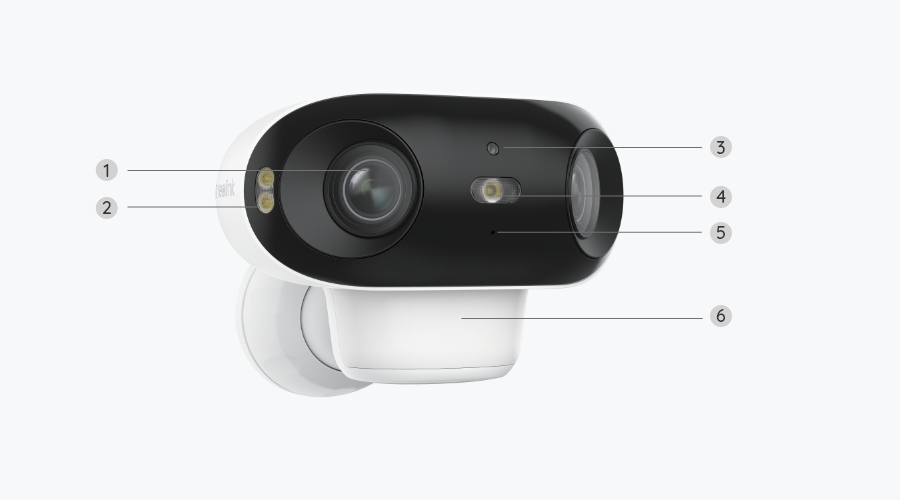 Reolink Argus 4 Pro
 Tapo C425
 eufyCam S4
Product images: Reolink Argus 4 Pro, Tapo C425, eufyCam S4
The short answer
"Wireless" gets used for two different kinds of camera. Many cameras sold as wireless only send video over Wi-Fi and still plug into an outlet. This guide covers the other kind: truly wire-free cameras that run on a battery, so you can mount one on a fence, a shed or a rental wall with no outlet nearby and no cable to run. Every pick below still needs a Wi-Fi signal where it goes.
- Best overall: Reolink Argus 4 Pro. Two lenses stitched into one 180° picture at 5120 x 1440, dual-band Wi-Fi 6, person, vehicle and animal detection and microSD storage up to 512 GB with no monthly fee for local storage.
- Best value: TP-Link Tapo C425. $59.99 on Tapo's store as of October 2026, 2K, a 10,000 mAh battery that Tapo rates at up to 300 days, free person, pet and vehicle alerts and microSD up to 512 GB.
- Most coverage from one camera: eufyCam S4. A 4K fixed lens plus a 2K dual-lens pan and tilt head, a 5.5 W solar panel in the box and 32 GB of built-in storage, with no plan needed for local video.
- Best for an Arlo setup: Arlo Pro (6th Gen). 2K HDR, a 160° view, both Wi-Fi bands and a swappable battery Arlo rates at 8 months, but most smart features sit behind an Arlo Secure plan.
- Best for Ring homes: Ring Outdoor Cam Plus Battery. $99.99, 2K and dual-band Wi-Fi 6, but Ring says videos are not saved without a plan.
- Longest battery life: Blink Outdoor 2K+. Runs on two AA lithium batteries that Blink rates at up to two years, and can save clips locally with a Sync Module 2 or Sync Module XR.
- Best for Google Home: Google Nest Cam (battery). Works indoors or out, includes 3 hours of event video history with no plan, and lists both Google and Alexa support.
- Cheapest swappable battery: Wyze Battery Cam Pro. $89.98, 2.5K, dual-band Wi-Fi and microSD recording, but person, package and vehicle alerts need Cam Plus.
All prices are from each maker's own US store as of October 2026 (checked October 19, 2026). Several were sale prices that day.
Wireless security camera comparison table
| Camera | Price (maker's US store, Oct 2026) | Battery (maker's claim) | Wi-Fi | Save video with no plan | Video and view |
|---|---|---|---|---|---|
| Reolink Argus 4 Pro | $179.99 with Solar Panel 2 | 5,000 mAh, about 2 months per charge at 300 seconds of recording a day | 2.4 + 5 GHz (Wi-Fi 6) | Yes: microSD up to 512 GB or a Reolink Home Hub | 5120 x 1440, 180° |
| TP-Link Tapo C425 | $59.99 (list $119.99) | 10,000 mAh, up to 300 days at 230 seconds of use a day | 2.4 GHz only | Yes: microSD up to 512 GB | 2K (2560 x 1440), 150° diagonal |
| eufyCam S4 | $349.99 | 10,000 mAh swappable pack plus a built-in 5.5 W solar panel | 2.4 GHz only | Yes: 32 GB built-in, microSD up to 256 GB, HomeBase S380 | 4K fixed lens (130°) plus 2K dual-lens pan and tilt (360°) |
| Arlo Pro (6th Gen) | $124.99 | Swappable battery, 8 months | 2.4 + 5 GHz | Cloud video needs Arlo Secure; a compatible SmartHub (VMB5000 or VMB4540) adds local storage | 2K HDR, 160° diagonal |
| Ring Outdoor Cam Plus Battery | $99.99 (out of stock on ring.com on Oct 19) | Quick Release Battery Pack (no life figure on the spec sheet) | 2.4 + 5 GHz (Wi-Fi 6) | No: Ring says videos are not saved without a plan | 2K, 160° diagonal |
| Blink Outdoor 2K+ | From $99.99 | Two AA lithium batteries, up to two years at 1080p and typical use | 2.4 GHz only, via a Sync Module | Yes, with a Sync Module 2 (USB drive) or Sync Module XR (microSD) | Up to 2K, 135° diagonal |
| Google Nest Cam (battery) | From $199.99 | Built-in 6 Ah lithium-ion | 2.4 + 5 GHz | 3 hours of event history included (cloud) | 1080p HDR, 130° diagonal |
| Wyze Battery Cam Pro | $89.98 | Removable 6,200 mAh pack, up to 6 months with normal use | 2.4 + 5 GHz | Yes: microSD up to 256 GB | 2.5K (2560 x 1440), 134° diagonal |
Battery figures are each maker's own and usually assume a set number of recordings a day. A camera facing a busy street or driveway will need charging sooner.
Reolink Argus 4 Pro: best overall
Who it's for: Anyone covering a wide yard, driveway or the front of a house who wants one wire-free camera and no monthly bill.
Key facts
- Reolink's US product page lists $179.99 for one camera with Solar Panel 2 as of October 2026. The camera's box contents list the camera, bracket, strap, mounting plate and USB-C cable, so the panel is the bundle option, not part of the camera.
- Two lenses stitched into one 180° horizontal image at 5120 x 1440 (8 megapixels) at up to 15 fps.
- 5,000 mAh rechargeable battery. Reolink's FAQ says about 2 months per charge with 300 seconds of recording a day, and that 10 minutes of charging powers the camera for 24 hours.
- PIR, motion, person, vehicle and animal detection.
- "No Monthly Fees For Local Storage" in Reolink's words: microSD up to 512 GB, a Reolink Home Hub, or optional Reolink Cloud.
- Dual-band Wi-Fi 6 (2.4 GHz and 5 GHz) and IP66.
Trade-offs: It records when triggered (Reolink lists "Triggered recording"), so expect clips rather than all-day footage. The frame rate tops out at 15 fps. Reolink's spec table lists Google Assistant and Alexa, but its FAQ only mentions Google Assistant. For the brand against its closest rival, see eufy vs Reolink.
TP-Link Tapo C425: best value
Who it's for: Renters and first-time buyers who want a camera up in minutes for well under $100.
Key facts
- $59.99 on Tapo's US store as of October 2026, with a list price of $119.99.
- 2K QHD (2560 x 1440) with a 150° diagonal field of view, four built-in spotlights for color night vision and a 94 dB siren.
- A 10,000 mAh battery. Tapo claims up to 300 days at 230 seconds of use a day, dropping to 180 days at 360 seconds a day.
- "Free AI Detection with Smart Alerts" for people, pets and vehicles, "no subscription required" in Tapo's words. Records to a microSD card up to 512 GB (sold separately).
- Magnetic base, IP66, and works with Alexa and Google Assistant supported displays.
Trade-offs: 2.4 GHz Wi-Fi only, so it will not join a 5 GHz-only network. A solar panel (Tapo A200) is sold separately, or the C425 Kit bundles one for $69.99 on Tapo's store as of October 2026. Our best solar security cameras guide covers the C425 Kit that includes one.
eufyCam S4: most coverage from one camera
Who it's for: Large yards and corner lots where one fixed camera leaves blind spots.
Key facts
- $349.99 on eufy.com as of October 2026.
- Three lenses in one body: a 4K (3840 x 2160) fixed lens with a 130° view on top, and a 2K dual-lens pan and tilt head below that tracks across 360° with 8x hybrid zoom. eufy says the fixed lens hands a subject to the moving head automatically.
- A 10,000 mAh quick-swap battery and an integrated, detachable 5.5 W solar panel. eufy's claim: 1 hour of direct sun gives 24 hours of power.
- On-device human, vehicle and pet detection with no HomeBase needed. 32 GB of built-in storage, expandable to 256 GB with a microSD card. Adding a HomeBase S380 brings face recognition and storage up to 16 TB.
- IP65, radar plus PIR motion sensing, a 105 dB siren, and works with Alexa and Google Assistant.
Trade-offs: The price, and 2.4 GHz Wi-Fi only. eufy's 24/7 recording option uses the included 14 ft cable kit and your own 5V/2A adapter, so it is no longer wire-free in that mode. Optional cloud backup is eufy's Plus Membership at $15 a month.
Arlo Pro (6th Gen): best for an Arlo setup
Who it's for: Households that want polished alerts and are happy to pay a monthly plan for them.
Key facts
- $124.99 for one camera on Arlo's US store as of October 2026. Arlo's menu lists the line "from $159.99" with a list price of $229.99, which matches its two-camera pack.
- 2K video with HDR, a 160° diagonal view, color night vision with a built-in spotlight, a siren and two-way audio.
- A swappable rechargeable battery. Arlo's spec table gives 8 months, and says it lasts 15% longer than the Pro 5S 2K.
- Sets up on either 2.4 GHz or 5 GHz Wi-Fi, connects straight to your router, and works with Alexa, Google Home, SmartThings and IFTTT.
- With no plan, Arlo says you keep motion notifications and live view. Cloud video, video object detection and interactive notifications need an Arlo Secure plan, which Arlo says adds 60 days of video history.
Trade-offs: Local storage needs an Arlo SmartHub (Arlo lists the VMB5000 and VMB4540 as compatible), sold separately. The Arlo Essential (3rd Gen) is the cheaper Arlo option at $69.99 on the same store, with 2K video, a 130° view and dual-band Wi-Fi. For Arlo against its biggest rival, see our Arlo vs Ring comparison.
Ring Outdoor Cam Plus Battery: best for Ring homes
Who it's for: Homes that already have a Ring doorbell or Ring Alarm and pay for a Ring plan.
Key facts
- $99.99 on ring.com as of October 2026, though the battery version was listed as out of stock when we checked on October 19, 2026.
- 2K video with a 160° diagonal and 140° horizontal view, two-way talk with noise cancellation and a remote-activated siren.
- Runs on Ring's Quick Release Battery Pack. Spare packs cost $34.99 and a small USB-C solar panel $39.99 on the same page.
- Dual-band Wi-Fi 6 (2.4 GHz and 5 GHz). Rated -4°F to 122°F, and Ring notes the camera may turn off in direct sun in extreme heat.
- Without a Ring Protect plan you still get real-time alerts and live view, but Ring says you cannot review, save or share videos. Ring Solo costs $4.99 a month or $49.99 a year for one device; Ring Multi is $9.99 a month for all devices at one location.
Trade-offs: No local storage is listed, so the plan is a running cost for as long as you own the camera. Ring's spec sheet gives no battery life figure. For Ring against other brands, see Wyze vs Ring and Blink vs Ring.
Blink Outdoor 2K+: longest battery life
Who it's for: Alexa homes and anyone who never wants to take a camera down to recharge it.
Key facts
- Blink's products page lists the Outdoor 2K+ "starting at $99.99" as of October 2026.
- Up to 2K video (2560 x 1440 at 24 fps on its Best setting) with a 135° diagonal field of view. IP65, rated -4°F to 113°F.
- Two non-rechargeable AA lithium batteries. Blink claims up to two years with battery efficiency settings at 1080p and typical use.
- It needs a Blink Sync Module to connect to Wi-Fi, and works on 2.4 GHz only.
- Local storage without a plan: a USB drive in a Sync Module 2 or a microSD card in a Sync Module XR, each sold separately. Blink says person detection needs a Blink plan or trial. Blink Basic is $3.99 a month or $39.99 a year for one device.
Trade-offs: The two-year figure assumes 1080p, not 2K. The Sync Module is one more box, and AA lithium batteries are a running cost. Blink's Solaris battery pack also fits the Outdoor 2K+ for solar power.
Google Nest Cam (battery): best for Google Home
Who it's for: Google Home and Nest households that want one camera they can move between indoors and out.
Key facts
- From $199.99 on the Google Store as of October 2026.
- 1080p HDR at 30 fps with a 130° diagonal view, and night vision with HDR.
- A built-in 6 Ah lithium-ion battery. It mounts with two screws or sticks magnetically to metal.
- Dual-band Wi-Fi (2.4 GHz and 5 GHz), IP54, rated -4°F to 104°F. On-device machine learning tells people, animals and vehicles apart.
- Up to 3 hours of event video history is included. Google Home Premium extends it: Standard is $10 a month (30 days of event history) and Advanced $20 a month (60 days of event history).
- Works with "Hey Google" and Alexa-enabled devices.
Trade-offs: 1080p is the lowest resolution here, and IP54 is a lower weather rating than the IP65 and IP66 picks. The Google Home app is required. Google's battery life figure sits on a separate support page that we did not use here.
Wyze Battery Cam Pro: cheapest swappable battery
Who it's for: Wyze homes and budget buyers who want a spare battery to swap rather than a camera to take down.
Key facts
- $89.98 on wyze.com as of October 2026 ($99.98 with the Wyze Solar Panel).
- 2.5K (2560 x 1440) with a 134° diagonal and 108° horizontal view, an integrated spotlight and siren, and radar plus PIR motion detection.
- A removable 6,200 mAh battery pack that Wyze rates at up to 6 months with normal use. Spare packs cost $22.99.
- Records to a microSD card up to 256 GB. Wyze says continuous or motion-only local recording is available, but that continuous recording greatly shortens battery life.
- Dual-band Wi-Fi (2.4 GHz and 5 GHz), IP65, and no hub required.
Trade-offs: Person, package and vehicle notifications and cloud recording come with Cam Plus, which Wyze says renews at $2.99 a month per camera after a 30-day trial. It is not compatible with the Wyze Base Station.
Wired or wireless: which is right for you?
Battery cameras win on placement: anywhere Wi-Fi reaches, installed with a few screws or a magnet, and easy to take with you when you move. The costs show up later.
- They record events, not everything. To save power, most battery cameras record only when motion triggers them. Reolink lists "Triggered recording" for the Argus 4 Pro, and Wyze warns that continuous recording greatly shortens battery life. If you want 24/7 footage, a plug-in or PoE camera is the better tool: the outdoor guide linked at the top of this page covers both.
- The battery is a chore. Maker figures run from about 2 months (Reolink) to up to two years (Blink), and busy spots drain faster. A solar panel or a swappable pack (Arlo, Wyze, eufy) cuts the hassle.
- Wi-Fi matters more than the camera. A wire-free camera is only as good as the signal where it hangs. Check the band too: the Tapo C425, eufyCam S4 and Blink Outdoor 2K+ use 2.4 GHz only, so they will not join a 5 GHz-only network.
- Plans differ more than hardware. Reolink, Tapo and eufy save video for free. Wyze saves to a card for free but charges for smart alerts. Blink needs a Sync Module for free local clips. Ring needs a plan to save any video.
How to choose a wireless security camera
- Check Wi-Fi at the spot. If your phone shows a weak signal where the camera will hang, fix that first or move the camera.
- Decide where video lives. Local storage (microSD, built-in memory or a hub) means no monthly fee. Our guide to security cameras with no monthly fee goes deeper on this.
- Count the true cost. Ring Solo at $49.99 a year adds about $150 over three years, more than the $99.99 camera itself. A microSD card (sold separately for Reolink, Tapo and Wyze) is the main extra for the no-plan picks.
- Match your ecosystem. Nest suits Google Home, Blink and Ring suit Alexa homes, and Tapo, eufy and Arlo list both Alexa and Google support (Reolink lists both in its spec table).
- Indoors only? You may not need a battery at all. See our indoor security cameras compared guide.
For a wider look at every camera type, from doorbells to floodlights, see our home security cameras compared guide.
What we don't know
- Reolink camera-only price. Reolink's product page listed only the $179.99 bundle with Solar Panel 2 in its product data on the day we checked.
- Blink single-camera price. Blink's products page says "starting at $99.99" for the Outdoor 2K+ without stating what that price includes.
- Battery life for Ring and Nest. Ring's spec sheet gives no battery life figure for the Outdoor Cam Plus Battery, and Google points to a separate support page for the Nest Cam's.
- Arlo Secure pricing. Arlo's plan page did not load for us, so we give no Arlo plan price.
- Real-world battery life. Every battery figure here is the maker's own. We found no independent data comparing them.
- Future paywalls. Makers can move free features into paid plans with an app update. Everything here reflects the makers' pages on October 19, 2026.
How this page was put together
HomeGearLab does not test products in a lab or at home. This page compares each maker's product pages, spec sheets, support articles, US store prices and plan pages for Reolink, TP-Link Tapo, eufy, Arlo, Ring, Blink, Google Nest and Wyze, all checked on October 19, 2026. Picks are based on those published facts: whether the camera is truly wire-free, how long the maker says the battery lasts, which Wi-Fi bands it uses and what you can do without a plan. Prices change often and several were sale prices that day, so confirm before you buy.
About the device cards below
The cards below are the picks that have their own pages on HomeGearLab. The card numbers only mark position on the page. They are not a ranking and not the result of any test. Card prices come from each device page, not from this guide, so they can differ from the prices quoted above when a maker changes its price.
Wire-free picks with their own HomeGearLab pages (order follows this page, not a score)
- +4K UHD with 180° field of view
- +No subscription required
- −Records on motion (plus time lapse), not 24/7
- −No Matter or HomeKit support listed
TP-Link Tapo
TP-Link Tapo C425Wire-free 2K outdoor camera with solar charging and colour night vision.
- +Truly wire-free with up to 300 days of battery per charge
- +Optional solar panel for effectively permanent power
- −No HomeKit or Matter support
- −Solar panel sold separately
Related guides
Frequently asked questions
What is the best wireless security camera?
For most homes, the Reolink Argus 4 Pro ($179.99 with Solar Panel 2 on reolink.com as of October 2026): a 180° view at 5120 x 1440, dual-band Wi-Fi 6, person, vehicle and animal detection and microSD storage up to 512 GB with no monthly fee for local storage. On a budget, the TP-Link Tapo C425 costs $59.99 on Tapo's store with free person, pet and vehicle alerts. The eufyCam S4 ($349.99) adds a pan and tilt head and a solar panel.
Are wireless security cameras any good?
Yes, for most homes, with two caveats. Battery cameras usually record when motion triggers them rather than around the clock, and they depend on a decent Wi-Fi signal where they are mounted. In return they install anywhere in minutes. Current models from Reolink, Tapo, eufy, Arlo, Ring and Wyze record 2K or sharper video, and several save it locally with no monthly fee.
Which is better, wired or wireless security cameras?
Wired or plug-in cameras are better if you want 24/7 recording and never want to charge a battery. Wire-free battery cameras are better where there is no outlet, for renters, or when you want to move the camera later. Many homes mix both: plug-in cameras near the house, battery cameras on fences, sheds and gates.
What are the downsides of wireless cameras?
Batteries need recharging (maker figures range from about 2 months for the Reolink Argus 4 Pro at 300 seconds of recording a day to up to two years for the Blink Outdoor 2K+ on AA lithium batteries). Most record events, not continuous video. They rely on Wi-Fi at the mounting spot, and some brands, such as Ring, need a paid plan to save any video.
Do wireless security cameras need Wi-Fi?
Every camera on this page needs Wi-Fi to send alerts and live video to your phone. Some also need a hub: the Blink Outdoor 2K+ connects through a Blink Sync Module. Cameras with local storage, such as the Reolink Argus 4 Pro, Tapo C425 and eufyCam S4, keep recordings on a card or built-in memory in the camera.
How long do wireless security camera batteries last?
It depends on how often the camera records. Makers' own figures: about 2 months for the Reolink Argus 4 Pro at 300 seconds a day, up to 6 months for the Wyze Battery Cam Pro, 8 months for the Arlo Pro (6th Gen), up to 300 days for the Tapo C425 at 230 seconds a day, and up to two years for the Blink Outdoor 2K+ at 1080p. A solar panel can keep most of them topped up.
Which is the best wireless security camera system?
For several cameras with no monthly fee, eufy's system is the most complete: the eufyCam S4 works alone with 32 GB of built-in storage, and adding a HomeBase S380 brings face recognition and storage up to 16 TB. Reolink cameras can share a Reolink Home Hub. If you already use Ring, Arlo or Blink, staying with that brand keeps every camera in one app.